
And their vote counts more than yours because they live in rural districts with lower populations. Smh at “democracy.”
0.47 l/km? That’s not too bad right?
47L/100km is terrible, my car does like 5L/100km.
replace the coal plant with a giant data center that is probably equally polluting.
The top image makes me want to cry. Every new solar farm I’ve seen IRL or in the media has been built directly on the ground, just wasting that space.
Why is what is in this image, or other such systems, not being done everywhere?
Like at our local IKEA parking area. Why did they empty a bunch of land next to the parking lot and build them there, instead of ontop of the carpark? Thus protecting the cars from the elements at the same time as taking literally 0 space.
As shitty as the average driver is, I see a lot more car accidents in a parking lot than I see car accidents in some random field.
When you put the panels where cars are supposed to be, you have to put them up higher, this requires more material for the structure. Because the structure is now much taller, you need more material to keep it rigid. You’ll also have a bigger profile compared to the wind, so you guessed it, more material is needed to make it stronger. Oh, and if a panel falls on someone’s car and damages it, or injured a person waking underneath, you’ll get sued, so you need a wider safety margin, which means a stronger structure, which means more material is needed.
When it rains on those panels, they create a concentrated line of water falling from a pretty good height. This will increase erosion of the parking lot, which means you need to do more frequent repairs to the surface, or you need to use more material to create gutters and channels to safely move that water away. If you go that route then you need to clean and maintain those gutters.
You’re also going to have a large energized transmission network running over an area with extremely high foot and vehicle traffic - The low electrocution risk could absolutely be mitigated (unless there’s damage, which is an inevitability for any equipment installed in a parking lot) but that’s not going to be a problem because the entire electrical system is going to be ripped out by a junkie before there’s a chance for anyone to get hurt…
Then there’s also the additional complexity required to clean elevated panels like that, the difficulty in maintenance, complication to firefighting, the list of logistical issues goes on.
There’s a middle ground though, which is to simply dedicate the lowest utilization portion of large parking lots to instead house standard ground solar installations. This is being done successfully in many places, as parking lot utilization is down across pretty much every commercial category post-covid so it’s an easy decision to make (especially in locations like dying malls) and commercial buildings often have very robust grid infrastructure already and underground utility conduits (for things like the lights in parking lots). They’re about the ugliest way to site a solar facility, but so much better than a parking lot…
Top image is called Agrivoltaics and certain crops do better in a little shade. Strawberries, lettuces, and brassicaceaes for example. Pawpaw would probably do well as well.
But I’m not ready to put Pawpaw in the ground!
Seriously though, TIL! It’s not native to my area, but apparently its range isn’t very far from me. My gf and I are getting into foraging lately (we picked a bunch of invasive garlic mustard last time we went out) and might take a few classes in it. So maybe if we find ourselves in those areas, we can look for Pawpaws next!
Sounds cool, come and share with us some of your [email protected]
If you’re into food stuff, you may be interested to know that there is an artisan near you who makes Pawpaw vinegar. Cant recall the name of the maker but Bryan Voltaggio plugged it on Triple Threat a while back.
It may be much harder/more expensive to install and maintain them if they’re built on top of the parking, not sure
I hate the nuclear hate. Maybe today we have better options, although micro-reactors have a lot of promise, but if we invested in nuclear energy 50 years ago our planet would not even be close to fucked up.
People are always fearful of the nuclear accidents but they don’t even come close to those killed in the extraction of fossil fuels, but poor lives don’t matter. God help anyone has to bear even a miniscule risk for their own energy production.
Thanks for listening to my rant
I thought the primary problem with nuclear is that it is incredibly expensive?
And the big roadblock is it takes way longer than an election cycle to get online, so there’s little to no incentives to start a project of one. Renewables have the advantage of going online within that window.
Private insurance for the project is incredibly expensive. But there are ways to go about it differently, if the will is there.
Looking it up to refresh my memory, it looks like there’s also the comparably very high construction cost and the cost of disposal and/or maintenance of the waste. Those feel like fairly fixed costs. Unless we can make those cheaper without sacrificing safety and worker pay, it seems like nuclear just isn’t economically practical.
People on average have a higher risk of exposure to radiation by going to their grandma’s for dinner than by living directly next to a nuclear power plant
Thank you for your rant. It is exasperating how people completely dismiss nuclear and politicians go right along with them.
No this is coal:

swimming pools <3
/j
I wonder what our descendants will think of those greed craters.
It depends, but in a lot of cases, they probably will be flooded and then become rather nice lakes. Coal is usually not very toxic, so this will be fine. Then plants grow around them and it can turn into a rather nice place. If this was not a desert before, nature will transform it into something pretty decent surprisingly quickly.
Coal is usually not very toxic, so this will be fine.
LOLWUT? Coal tailings are some nasty shit.
I live in an area where there’s tons of flooded mines. They’re toxic. They’ll kill larger waterways and everything in them if they breach containment. The creeks here run different colors depending on what mine is leaking into them and most of the coal industry stopped mining a hundred years ago.
Ahh thanks for the picture! I used to live near where they had several of these growing up. We were fed the “clean coal” angle. So many grow up believing that it’s better than other coal and better burning. (clean coal isn’t a thing lmao) The peopel felt better with this angle about it.
It was the northern plains, though. So it was all boring open landscape already. (I referred to it as the moon growing up.) There’s not a lot of people living out there, anyway. Wyoming specifically, though, has environmental regulations on oil, gas, and coal from a beautification standpoint. So yes, they can have these large pits, but once done, they have to turn them into things like ponds/lakes/etc. They can drill for oil/gas as well in the state, but they can only be so many feet/miles between pumpjacks to not ruin the landscape. That type of thing.
It’s been slowing down as an industry, coal that is. One of the major exporting countries that was buying and using coal (had even completely purchased many of the processing plants there in WY) was China. In the last few years, China has largely moved away from using coal as much, so that industry is in decline. They’ve been doing a lot more Solar, Wind, and Hydro. So as long as we keep moving toward that, these big pits will slow. You just need to get other big coal consuming countries onboard.

EDIT: OH another fun thing about Wyoming as a state, but specifically counties that have these coal mines, they require x amount of the profit made from these resources must be put back into the towns themselves. A beautification type fund or something (I have since moved away but recall this) So you actually will have some surprisingly well tended and well funded towns randomly in wyoming because of this.
(I do recall as a kid, the mines would have their explosion technicians be the ones to do the fireworks events for the fourth of july celebrations. Seeing as they were already well versed in exploding things, those were some of the most magnificent fireworks displays.)
Compare that to other states that have natural resources that are being mined and drilled, they don’t require as much to be put into the places they’re getting things from, and things get run down and driven out. The resource itself isn’t going anywhere, but you get these people who bend over backwards allowing these industries to take advantage and suppress other industries so their worker pool isn’t competitive because it will “bring jobs and industry in”. They end up giving far too many concessions to the fossil fuel industry, not holding them accountable for their actions in the area. The resources get used and then they move out and leave a huge vacuum, killing smaller communities entirely.
So Wyoming is actually pretty well situated on handling the fossilfuels in there.
I hate to be that guy, but China has increased electricity production in general. It is just that solar + wind + hydro make up most of the gain. However that still means:

Ahh thanks for the link! I admit I’m coming in at a more anecdotal position of people I know who still live and work in that industry. So it may just be their isolated area that is experiencing a downturn. They may be still acquiring coal but from other sources.
over here they destroy towns and forrests for this shit ;w;
nuclear is pretty cool.
You just need to find a long term storage solution that is safe (and cheap) for the next 100.000+ years. That‘s longer than the modern history of humans. At our current trajectory this period will contain hundreds of world wars, none of the current nations will exist and we will have technology far beyond our comprehension. I am also totally neglecting all the companies making the profits today will be gone. Funnily enough many nuclear disposal site are built close to borders, which shows the short sightedness of the designer. Also also the resources for nuclear energy are finite, same as with coal. So we can may be use the technology for couple hundred years at best, but have to deal with the waste way longer.
I am not against new nuclear power plant projects, but please think about disposal first, let companies pay for it today and then think about building the actual plant.
Memes like these make progressives look like dumbasses.
Look at all that water vapor polluting the air! Omg
- Sincerely, a progressive
Would like to live next to a plant like that?
It’s not about the vapor but about the land it’s occupying. It also looks ugly like shit. People will complain bout wind farms destroying the landscape but huge chimneys don’t bother them for some reason.
I used to live within a certain radius of one, our local school used to stock iodine pills in case of an emergency. Luckily I’m Canadian and we have one of the best nuclear track records full stop so it was never a worry.
Honestly? Yeah. Well if I didn’t already have my house fully off grid.
Being in proximity to a nuclear power source would help ensure minimal power outages compared to fossil fuels.
So if I had to choose? Yes. However, I took things into my own hands and have a 36kW solar system with 100kWh battery bank powering my property.
YMMV
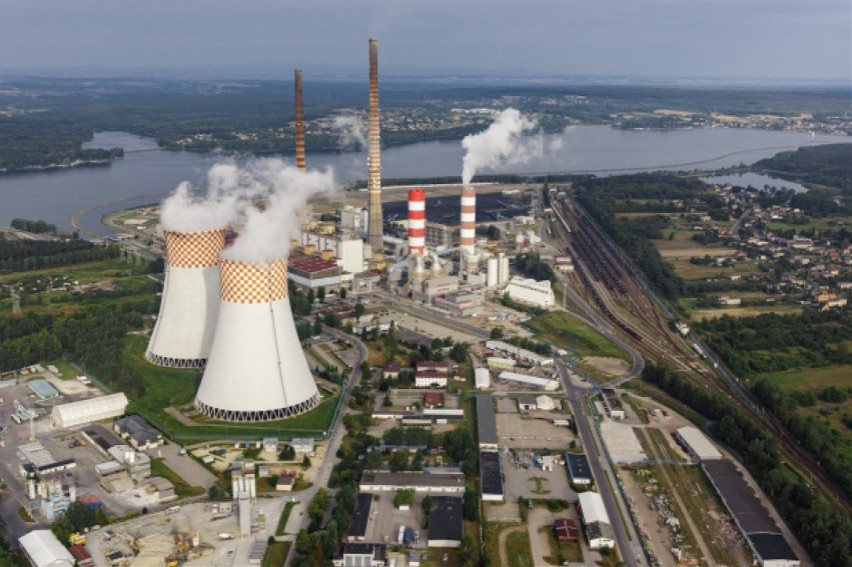
Aren’t those plants noisy? It’s a industrial installation. Don’t you have constant traffic and noise there? Where I live we don’t have nuclear power plants so I don’t know. We have this type of plants:
I would definitely prefer solar or wind farms.
Am example of what you’re saying is Michigan City, Indiana. It’s actually a pretty nice little tourist town. I go every year for the Great Lakes Grand Prix. It’s just an excuse to go to the beach and drink some beverages. It has a decent beach (very nice by Great Lakes standards), dunes, a zoo, and a coal and natural gas plant right on the water front… It’s such a cool place as long as you don’t look in the one direction and see that huge eye sore right next to the beach.
We had a coal plant near where I live that’s along the riverfront. Thankfully the government here saw sense and tore the whole thing down and replaced it with the largest solar farm in Canada.
i don’t like nuclear, mostly because of how it creates this highly dangerous waste, that our ancestors will still have trouble with (and thinking about it, is probably mined in a similarly destructive way to coal?), but i got to say that nuclear power plants actually lool fine to me and their vapour is actually quite pretty and scenic imo. ofc i would not want it everywhere, but its fine. i would not base my opinion of nuclear on that.
Coal and natural gas plants can also use the same cooling tower design.
It looks like maybe a coal plant is depicted, on account of the tall smoke stacks and what look like drop chutes for handling solid coal. But the layout doesn’t make sense. What are the smoke stacks coming out of?
It looks either AI, or a combination of pictures via Photoshop. I’m guessing AI, but hard to know for sure.
I mean, it depicts people planting crops UNDER the solar panels. Out of the sun.
Yeah, this is 100% AI.
It depends on the crop and how they do the layout, but you can absolutely grow some plants under partial shade from panels.
The sun moves.
Yeah, and? Most crops need more than just a few hours per day of sunlight. Those panels are HUGE. Way bigger than the shadow we’re seeing.
But more to the point, what are they even growing there? It looks like ivy that turns into some indistinct shrub, and then there are flower bushes behind that? Also those panels look like they’re about 20-30cm thick when you compare them to the people vaguely “harvesting” the crops. And I’m pretty sure those posts holding them up are basically railroad rails with no support on the back of the panels.
Agrivoltaics is the term for combining crops and solar
Reverse image search leads to: https://www.goodnewsnetwork.org/agrivoltaics-of-solar-power-and-farming-are-a-big-success-on-this-boulder-farm/
Attribution is: “Jack’s Solar Farm – Photo by Werner Slocum: NREL”
Searching that name returns this person, listed as a photographer with National Renewable Energy Laboratory: https://www.linkedin.com/in/werner-slocum-7976503
That’s pretty interesting. Makes more sense when posited as a way to grow northern crops in more mid-latitude areas.
I like those cooling towers now that I know what they do. It’s kind of dope inside there
One could say… they’re pretty cool
I’ll never forgive you for this

Smoke stacks aren’t specific to nuclear - it’s specific to large boiler plants I think.
Nah.
Damnit, Stabby, I was trying (not very hard, mind you) to work.
There’s a lot of back and forth going on in this thread, a lot of it around environmental impact of coal, and land uses. I’ll try to clear some of this up. At worst, you’ll just get my ramblings on the topic.-
Nuclear energy. I largely agree with @[email protected]. Nuclear has a shitty stigma, and that really precludes it from being even a transitional energy source, particularly in North America. While the wastes live forever (essentially) they are concentrated, and after a century or so, they are generally similar to other toxic wastes (e.g., primarily alpha and beta radiation), and if properly stored, are pretty safe. I’m not a nuclear expert, however, so this is more of an opinion than anything, though maybe a bit more informed than the average schmoe (though schmoe I am).
-
Coal mining - historically, very destructive, no land use planning, just let the pit fill on its own, Metal Leaching and Acid Rock Drainage (herein: ML/ARD) issues. ML/ARD issues arise when you have metal and sulphur bearing rock that’s exposed to atmosphere over time. Sulphur oxidizes, drops pH, and leaches metals out of the rock. This can occur sometimes at neutral pHs but it’s less common and dependent on the metals in the rock. If you just leave the pit to fill on its own, it takes a long time, and you’re more prone to ML/ARD and water quality issues as a result. If you actively flood the pit, you can largely avoid these issues, but you still need to model, check, and monitor your future water quality so you don’t have a pit full of toxic crap. Usually, if water quality is poor, they can use semi-passive treatment (e.g. in pit bioreactors) or actively (water treatment plant) treat water until water quality is good enough to release to the surrounding environment, once the pit’s water elevation reaches whatever target they have set out for it.
@[email protected] points out how mining companies are often required to put money back into the towns around them. This is part of social closure of the mine, so they don’t leave behind ghost towns. Generally, though, it doesn’t work. Towns need another source of employment once the mine shuts down, but we’re largely starting to see mining companies be required to have some sort of social transition plan in place for workers and people connected to the mine.
2a - Mining wastes @[email protected] yes, coal wastes can be toxic, this links back to ML/ARD I mention earlier. Tailings are crushed (usually to sand sized) rock that’s been processed - they usually have faster ML/ARD onset due to their smaller particle size -> increased surface area. @[email protected] also tied to ML/ARD and water management -see #2 above
3 - coal plants: not much to add here, but they are often a source of metal deposition (via dust, fly ash), and radioactivity (radon in rock).
Nuclear waste is pretty bad and incredibly expensive to store. That storage also needs to be maintained for the entire time it’s stored. Burying it is not enough, that will contaminate the water somewhere. Not to mention the upkeep on nuclear plants is very expensive and even then they only have a lifespan of 5 decades. Plus, it only takes one disaster for a meltdown. That said, these are problems that could be addressed and mitigated and in some areas it makes sense.
-
For those among us with a higher intellect (aka metric system users): 5mpg equals a consumption of 47 litres/100km.
Also the vast acreage of corn grown for ethanol is apparently fine.
The latest petrochemical industry astroturfed “wisdom” is that solar cells leach toxic chemicals into the soil. Get that. I mean, we can’t eat fish more than once a week because the entire fucking planet is full of mercury from mining and burning fossil fuels, but solar cells are the problem, right.
Feels good to live in a rural area that’s embraced solar.
They’re librul panels controlling the weather and making kids trans.
/s
So here’s where this is not exactly always true. My parents own a good chunk of land, more than 100 acres. Around the same time we were approached by an oil company wanting to put a well on their land, and a solar company wanting to put solar panels on the land. The oil company wanted 5 acres for a 100 year lease. The solar company wanted 70 acres on a 100 year lease. During these leases the land effectively belongs to the company who signs the lease. So for solar, for 100 years we wouldn’t be able to plant or grow or run livestock on the land. So the scenario pictured is not always the way that it works.
And for the record, we told both of the companies no.
Thanks for posting about your experience with the leases, I had not considered the implication of the land use for solar on the landowner. I assumed you could still do whatever you wanted (within reason) under the panels with the understanding that anything in the way when it came time to service them would be moved or destroyed. Preventing grazing or planting would be a problem. I assume that is not necessarily how every lease is setup but its good info.
Having been to a couple of drill/frac sites on ag land, I’d say y’all made the right call by saying no to that.
I’ve also heard anecdotes about companies leasing land for energy production. Windmills have similar restrictions on the landowner. Like no permanent structures within 100m. So, no barns, stables, corrals, etc. can be built for the 100 year term.
I don’t have an issue with green energy, but those agreements are not nearly fair enough to the landowners.
The bottom picture can power half a chatbot.
Not me, I’m rural American and I installed my own solar power at home
Fossil fuel power plants take up less land so dumbasses see it less.