Don’t try to tax the dollar value of the securities. Enact a wealth tax of the securities themselves. Transfer shares of the security to the IRS, to be liquidated slowly over time. Non-liquid securities would be held much like a lien.
That’s significantly more complicated for no real benefit. It actually carries a much higher risk for the IRS as the securities are volital.
All you have to do is tax them when they use the assets as collateral, and for good measure tax the loan as income.
You could even throw in a minimum threshold to not apply it to regular people, and force them to pay people more in the process. This can be achieved by setting the threshold to a variable, like 100x the average annual take home pay of the bottom 20% of earners (~$1.6m) and make it a annual total of loans to close the loophole of a bunch of small loans.
If they want cheaper loans people have to be paid more.
All you have to do is tax them when they use the assets as collateral,
If you tax loans backed by collateral, the banks will just change their lending policies on unsecured personal loans. No collateral = no tax on the use of that collateral. The method of taxation you are suggesting is trivial to evade.
That’s significantly more complicated for no real benefit.
It is more complicated, but the benefit is immense. The benefit is that Shareholding becomes much less valuable to the oligarch Problem Class, and much more valuable to the Working Class. Company ownership and control is driven toward workers. Working Class shareholders become the predominant voice in determining company policy. Profit extraction goes to Working Shareholders rather than the Problem Class.
It actually carries a much higher risk for the IRS as the securities are volital.
Describe that risk. Remember: The IRS is not owed dollars. They are only owed the shares. The dollar value of those shares is entirely irrelevant.


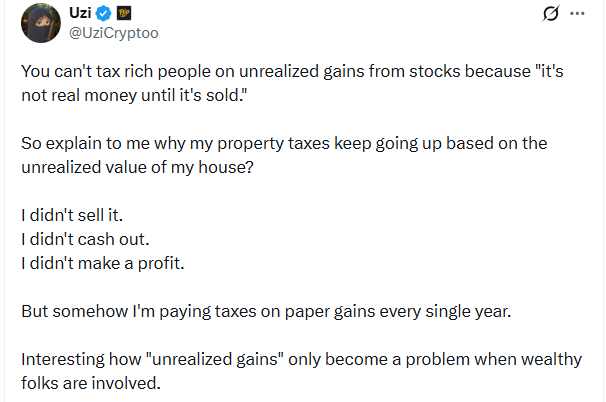
Don’t try to tax the dollar value of the securities. Enact a wealth tax of the securities themselves. Transfer shares of the security to the IRS, to be liquidated slowly over time. Non-liquid securities would be held much like a lien.
That’s significantly more complicated for no real benefit. It actually carries a much higher risk for the IRS as the securities are volital.
All you have to do is tax them when they use the assets as collateral, and for good measure tax the loan as income.
You could even throw in a minimum threshold to not apply it to regular people, and force them to pay people more in the process. This can be achieved by setting the threshold to a variable, like 100x the average annual take home pay of the bottom 20% of earners (~$1.6m) and make it a annual total of loans to close the loophole of a bunch of small loans.
If they want cheaper loans people have to be paid more.
If you tax loans backed by collateral, the banks will just change their lending policies on unsecured personal loans. No collateral = no tax on the use of that collateral. The method of taxation you are suggesting is trivial to evade.
It is more complicated, but the benefit is immense. The benefit is that Shareholding becomes much less valuable to the oligarch Problem Class, and much more valuable to the Working Class. Company ownership and control is driven toward workers. Working Class shareholders become the predominant voice in determining company policy. Profit extraction goes to Working Shareholders rather than the Problem Class.
Describe that risk. Remember: The IRS is not owed dollars. They are only owed the shares. The dollar value of those shares is entirely irrelevant.