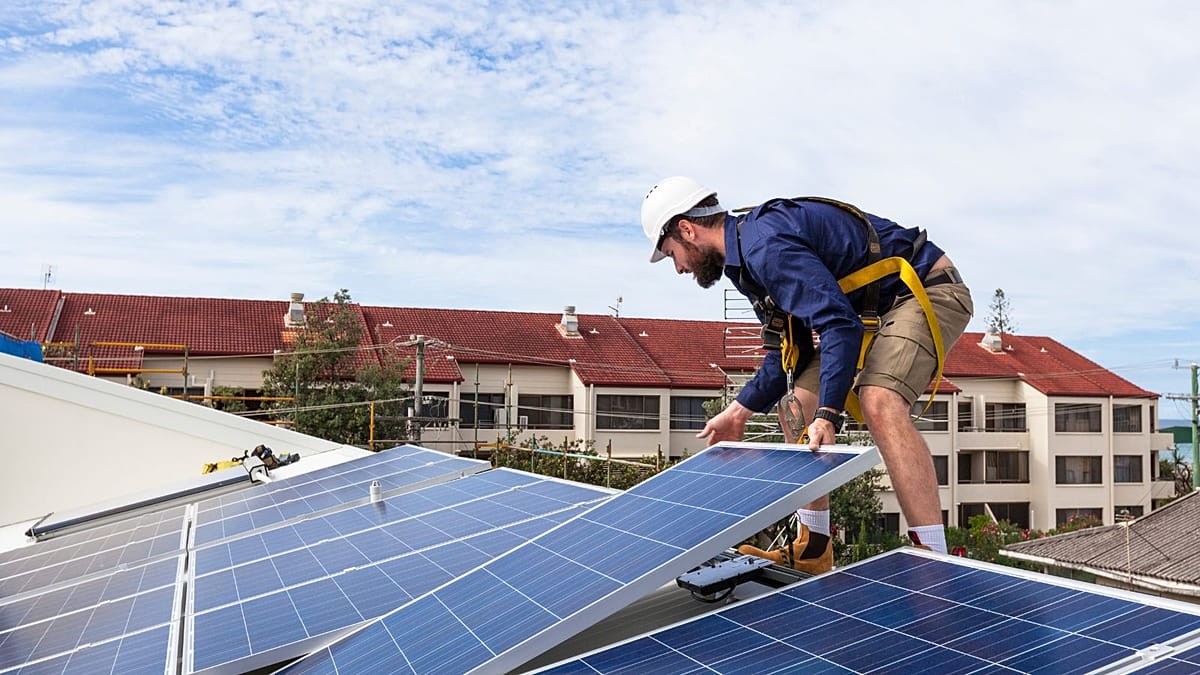
Installing solar panels on your home or business is common in many European countries. But they really come into their own during energy crises.
“If you’ve got a solar roof on your home and you’ve got a battery then, depending on how much energy you can generate, you are substantially insulated from importing electricity,” explains Matthew Clayton, CEO of UK-based Thrive Renewables.
Dynamic tariffs are becoming more common in Europe. This is where the price of electricity varies throughout the day and night, with costs going up during peak periods, like dinner time, when households are using more.
This means that if you store up solar power during daylight hours, when the sun is at its strongest, then you can use that energy, rather than drawing it from the electricity grid, during the most expensive periods. “Your relationship with the grid is totally changed,” says Clayton.
Grid going down?
I think the last time I experienced that was 15 years ago. Even then it was only for a couple of hours.
Like it’s such a non event as to not even bother trying to fix it.
The disadvantage is that you still lose power when the grid goes down, even if you have storage. Unless you run parallel circuits, and your system is island/black start capable.
I’m not sure how that is a disadvantage compared to being on the power grid? If you are on the power grid, and the grid goes down, you also don’t have power.
What is this a disadvantage compared to?
