
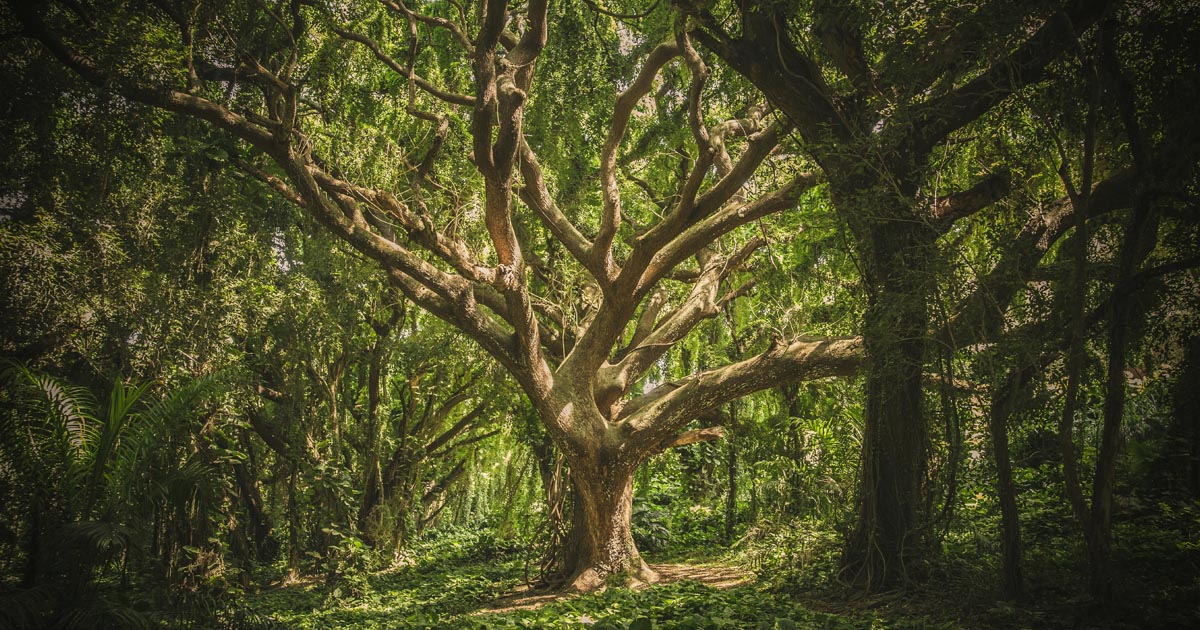
Resilience applies to systems at every scale; from our cells and bodies to our families, friends, cities, and nations, all the way up to our global civilization and biosphere. Each of these is facing threats from climate change; as conscious individuals, we have the ability to direct our time, energy, and resources towards strengthening these systems.
The world needs resilient individuals to weather the challenges of the coming years, whether that’s helping to lower our ecological footprint, developing sustainable ways of meeting our needs, building lifeboat communities, or spearheading shifts in our governments and economies.
Since it’s such a central concept, it’s important to get clear on what resilience means. We like this simple definition from the Stockholm Resilience Centre:
Resilience is the capacity of a system, be it an individual, a forest, a city or an economy, to deal with change and continue to develop.
So how can we work to build climate resilience, both personally and collectively? In this post, we’ve identified 7 principles which expand our ability to weather crises:
- Decentralization
- Diversity
- Redundancy
- Capacity
- Elasticity
- Feedback
- Transformation
For each principle we’ll explore the definition and theory, along with real-world examples so you can integrate them into your life. We hope these keys help you cultivate more resilience in your life, and that this in turn steers us towards a more sustainable future.
You must log in or # to comment.
@relianceschool your post seems to be a circle reference in my mastodon client. It links to itself.