

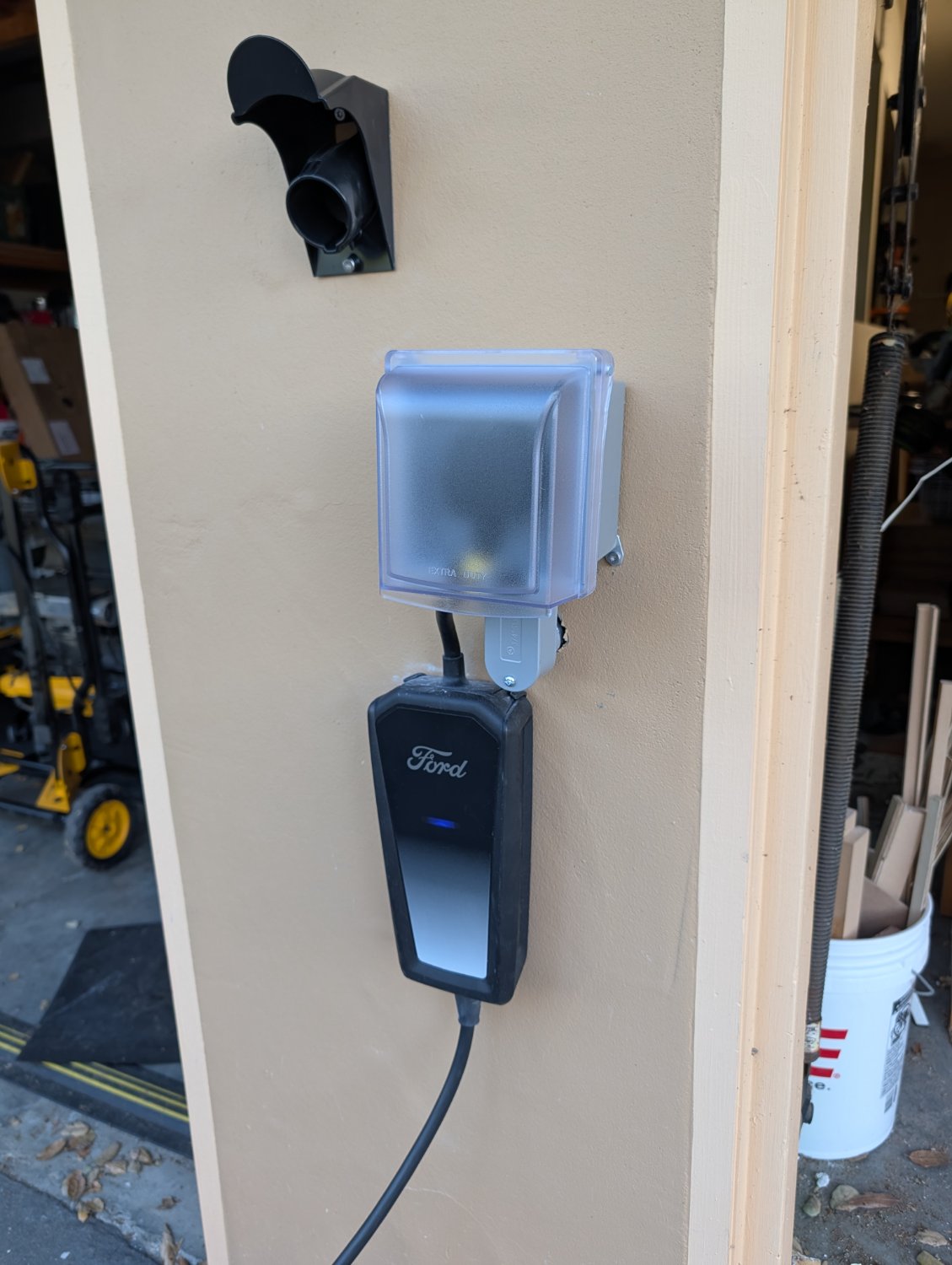
Installed a 40amp circuit for the EVs after charging a PHEV for 5 years and a BEV truck for almost a year on a single 15amp circuit.
50ft x 8 AWG x 4 wires isn’t cheap ($1.32/ft with tax), plus conduit, straps, breaker, wet location boxes and outlet cover and the extra cost for an EV rated outlet.
Wasn’t room between the post and the garage door king stud for a flush mount box, oh well.
I’ll pay the electrician for a proper hard-wired charger when we upgrade service and run it from the main panel instead.
I’m in Europe, so we have 230 volts here (two times less amps needed for identical power), but… I charge my i-MIEV with 5.5 amps at night (the whole night) and it’s charged by the morning. Knowing that, I optimized my grid connection down to 3 x 6 amps (three phases, each up to 6 amps).
Of course, if I charge during daytime, I can draw power from the house inverter, so then I charge at 10…13 amps.
You actually have an I-MIEV?! How is that working for you?
Not well, but it drives.
Battery capacity is small. It’s a city car all the way.
Heating is abysmal. I don’t touch it, it drains the battery. I only heat the seats (from the car 12 V system) and windscreen (with a large drone battery and two Chinese 400 W heat blowers).
Different sizes of tyres of front and back wheels are impractical. Changing headlight bulbs is a nightmare (manual says to take off the front bumper, but I deviate from the procedure and leave some screws missing, so I can take out the headlights).
The gear shifter has 2 needless pull cables (not electrical cables) which freeze in winter and cannot be bypassed easily. The motor controller borked itself (high voltage comparator error) and I had to take it apart to fix (fortunately a fix was documented).
One of the steel brake pipes rusted and leaked, and the repair shop refused to lower the battery (I have done it myself) because they didn’t feel comfortable. I had to bypass the steel pipe with a copper pipe, fortunately technical inspection did not notice.
Rear ABS sensors go faulty and start lying, producing error messages. An “original” spare part costs 200 euros, fortunately there’s a trick (installing another car’s sensor in reverse) and it costs 17 euros.
But what I can I ask, it’s a 15 year old car.