That is where you are going wrong. US cities were not transformed overnight to car oriented places either. That took decades. Maybe where the error arises is from the idea that only transit needs transit oriented places to work well, but cars do need car oriented places to support a car only design as well. Yes, cars can drive on all sorts of roads but that is true for one car, if you put everyone into a car in a transit oriented city, the whole traffic is going to collapse, commute takes forever …
Transition to transit oriented places can work, but you need long term dedication and political support. The Netherlands demonstrate that quite well. In the 1970s they were on their way to become transformed into a US style car hell hole, even had US city planners to make it a reality. The first oil crises and rising popular opposition against it, saved them.
You don’t transform an entire car oriented city into a transit oriented overnight. It is more like a crystallization process. A transit oriented city condensates along axis. This is happening in some places already today. One example is the Washington DC metro area. But of course, due to lack of political support if not open ideological opposition, it happens even much slower than it has to.
Exactly! The car transition wasn’t overnight because it can be done piecemeal and still work fine. Connecting to a road network is really easy. My parents live at a lakehouse in a neighborhood with 100 houses that popped up in the middle of bumbfuck nowhere by laying down gravel next to a little county road running to a power plant that uses the lake for cooling.
My old office complex when I worked in Houston poured roads on both sides of the parking lot and dedicated them to the Citybas part of the platting process, and the city had a new alternate route they didn’t even have to pay for.
Rail doesn’t have that flexibility. If a developer dedicates an easement for rail as part of a development, it still isn’t useful until every landowner along the route has done that, which will probably take centuries.
This shit is what I do for a living. All through college we all loved the TOD dreams, but when you actually work in municipal and regional transportation and development, you quickly learn how incredibly difficult it is to achieve even before the political process gets in the way.


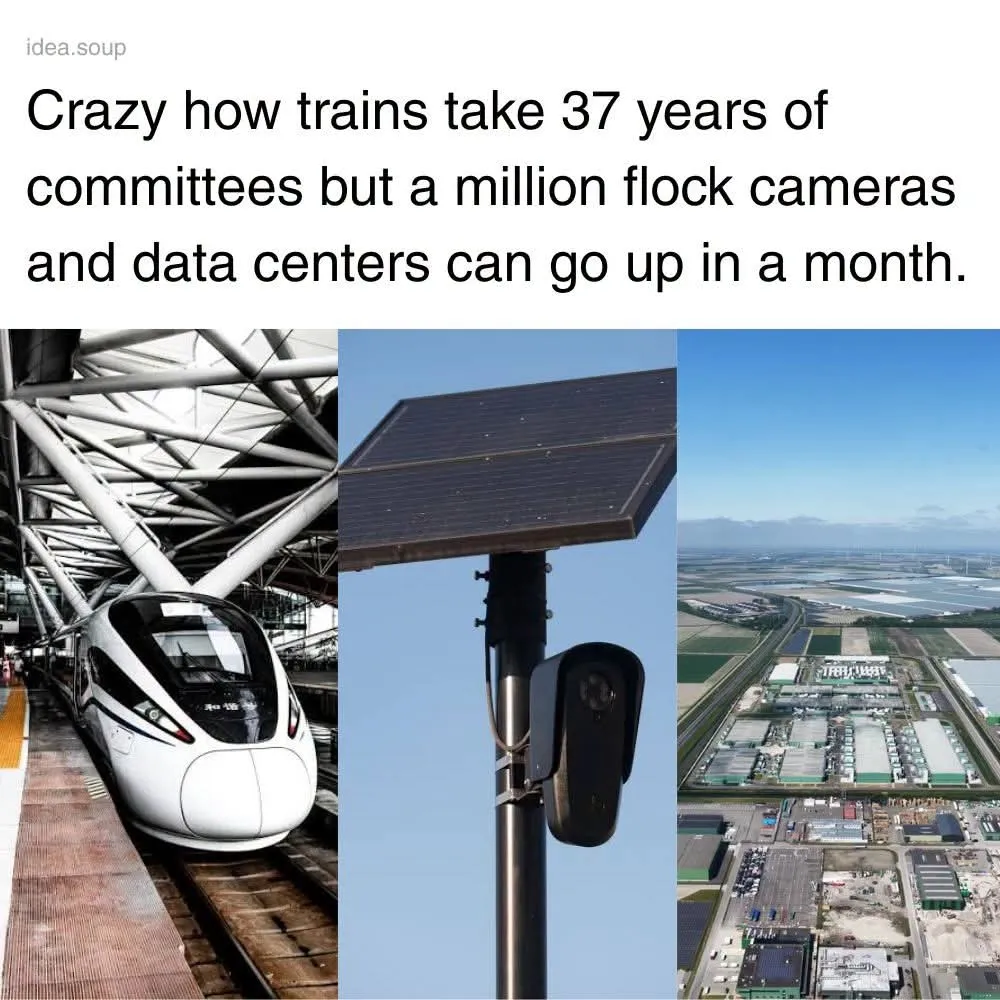
That is where you are going wrong. US cities were not transformed overnight to car oriented places either. That took decades. Maybe where the error arises is from the idea that only transit needs transit oriented places to work well, but cars do need car oriented places to support a car only design as well. Yes, cars can drive on all sorts of roads but that is true for one car, if you put everyone into a car in a transit oriented city, the whole traffic is going to collapse, commute takes forever …
Transition to transit oriented places can work, but you need long term dedication and political support. The Netherlands demonstrate that quite well. In the 1970s they were on their way to become transformed into a US style car hell hole, even had US city planners to make it a reality. The first oil crises and rising popular opposition against it, saved them.
You don’t transform an entire car oriented city into a transit oriented overnight. It is more like a crystallization process. A transit oriented city condensates along axis. This is happening in some places already today. One example is the Washington DC metro area. But of course, due to lack of political support if not open ideological opposition, it happens even much slower than it has to.
Exactly! The car transition wasn’t overnight because it can be done piecemeal and still work fine. Connecting to a road network is really easy. My parents live at a lakehouse in a neighborhood with 100 houses that popped up in the middle of bumbfuck nowhere by laying down gravel next to a little county road running to a power plant that uses the lake for cooling.
My old office complex when I worked in Houston poured roads on both sides of the parking lot and dedicated them to the Citybas part of the platting process, and the city had a new alternate route they didn’t even have to pay for.
Rail doesn’t have that flexibility. If a developer dedicates an easement for rail as part of a development, it still isn’t useful until every landowner along the route has done that, which will probably take centuries.
This shit is what I do for a living. All through college we all loved the TOD dreams, but when you actually work in municipal and regional transportation and development, you quickly learn how incredibly difficult it is to achieve even before the political process gets in the way.