Indeed, the PRR S1, and the UP BigBoy are purely American, and the first is the fastest steam engine ever, and the second is probably the engine that can handle the heaviest loads with the steepest grades, without a chain. Though there are some honorable mention locos in Madison, IN that have the world record for steepest grade without a chain, but those guys can’t haul what BigBoy can. BigBoy can’t make that particular grade, not because it is too steep, but because the rails are too narrow and curvy. Deisels can’t compete for load weights, neither can electric engines. Un/fortunately both diesel and electric beat the crap out of steam on maintenance costs and downtime.
I think the amount of funding is kind of irrelevant. Our government has lost (or perhaps given away) the ability to actually build anything without an infinite array of subcontractors all trying to fleece the taxpayer for as much money as possible. If the budget was higher, the expenses would simply grow proportionally to absorb it.
There’s a lot of good comments here, but folks are overlooking a major structural issue in the USA that IMO is largely at the root of why rail development has become so complicated - and that’s the fact that local jurisdictions are very powerful compared to many other countries. Every city and county along a route (or even potential route) gets a seat at the table, and will work to represent their constituents and economic interests. This means there’s a ton of voices advocating for completing priorities - they want rail to go through their city or county, but only if the HSR gets a stop at their preferred locations. If the jurisdiction doesn’t get what they want, they’ll often work to grenade the entire project.
China, by comparison and for example, has an authoritarian central government that can just dictate a route, displace individuals or communities in the way, and tell anyone upset to pound sand.
Not trying to say that authoritarianism is the answer. We’re well on our way to that, and it’s sure not helping things. It’s just a structural difference in the USA that makes makes such projects far more complicated, expensive, and inefficient.


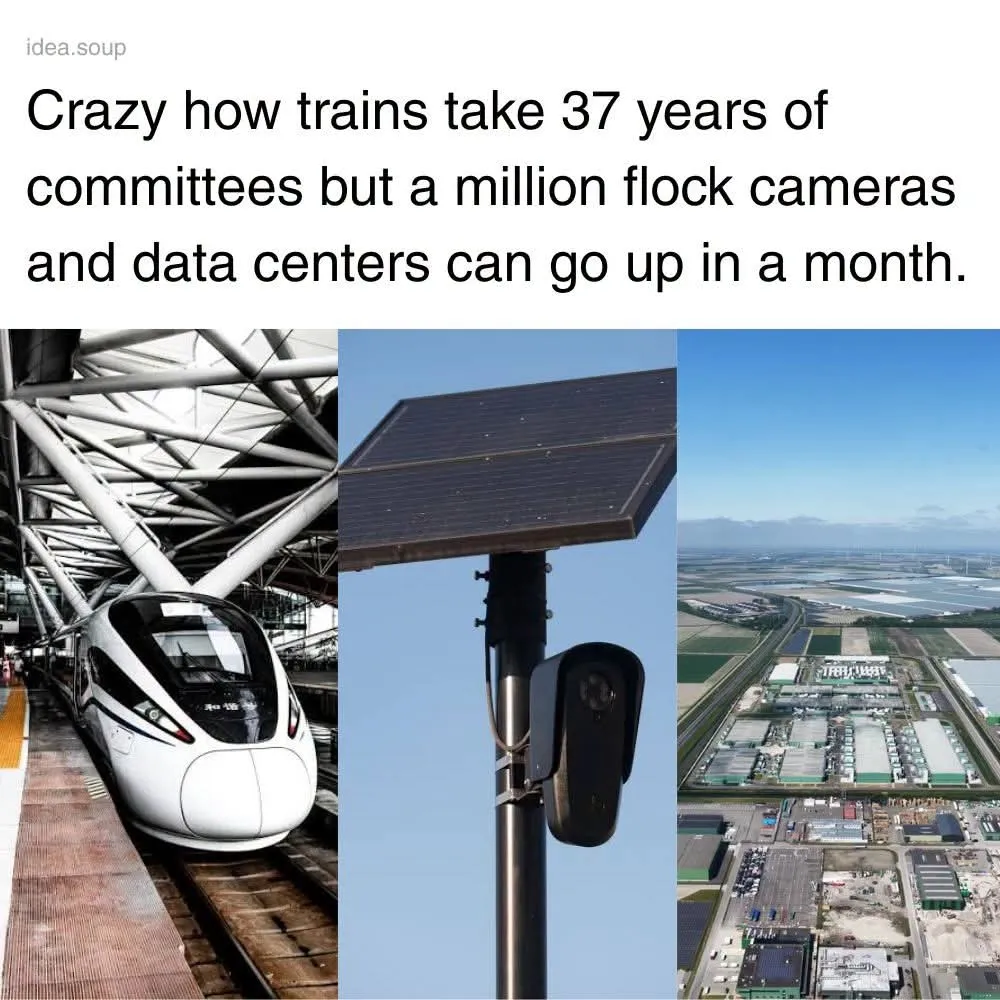
California high speed rail was something my parents voted on when I was a child.
I had this friend who was a year under me in school. Her kid voted for it too.
It still doesn’t exist. California can’t build something as modern and cutting edge as a train.
Real trains are cutting edge though. But yeah the usa just cannot.
We can’t manage a steam engine.
no you were really good at those! it’s just that you should probably have continued after that.
Indeed, the PRR S1, and the UP BigBoy are purely American, and the first is the fastest steam engine ever, and the second is probably the engine that can handle the heaviest loads with the steepest grades, without a chain. Though there are some honorable mention locos in Madison, IN that have the world record for steepest grade without a chain, but those guys can’t haul what BigBoy can. BigBoy can’t make that particular grade, not because it is too steep, but because the rails are too narrow and curvy. Deisels can’t compete for load weights, neither can electric engines. Un/fortunately both diesel and electric beat the crap out of steam on maintenance costs and downtime.
Fucking shame about Roger Rabbit.
This guy trains
We were, we aren’t.
If California became it’s own country and stopped funding the red States it could find the funding to build anything really
I think the amount of funding is kind of irrelevant. Our government has lost (or perhaps given away) the ability to actually build anything without an infinite array of subcontractors all trying to fleece the taxpayer for as much money as possible. If the budget was higher, the expenses would simply grow proportionally to absorb it.
The funding, yes. But if we had to actually make a train, a curb, a bollard, a bridge, a consumer gpu? We’d be so fucked.
There’s a lot of good comments here, but folks are overlooking a major structural issue in the USA that IMO is largely at the root of why rail development has become so complicated - and that’s the fact that local jurisdictions are very powerful compared to many other countries. Every city and county along a route (or even potential route) gets a seat at the table, and will work to represent their constituents and economic interests. This means there’s a ton of voices advocating for completing priorities - they want rail to go through their city or county, but only if the HSR gets a stop at their preferred locations. If the jurisdiction doesn’t get what they want, they’ll often work to grenade the entire project.
China, by comparison and for example, has an authoritarian central government that can just dictate a route, displace individuals or communities in the way, and tell anyone upset to pound sand.
Not trying to say that authoritarianism is the answer. We’re well on our way to that, and it’s sure not helping things. It’s just a structural difference in the USA that makes makes such projects far more complicated, expensive, and inefficient.
Okay? Maybe there’s some other difference.
All the funding was eaten up by Muskolinis hyperloop project that didn’t bear any fruit. All according to plan, now they can sell more Teslas.