Here’s the history of US inflation in a nutshell.*
Lyndon Johnson wanted to have a Great Society and have a quick win in Vietnam. He thought that a big buildup could give the US a knockout blow, but it turned into an expensive quagmire. The US was dropping a dozen Hiroshimas worth of bombs on the jungle every week. This meant that US steel mills were working 24/7 and not getting updated. LBJ is printing money to pay for this, because he doesn’t want to raise taxes.
Nixon comes in in 1969, promising to end the war. Instead he triples down on the policy of printing money and overworking the factories. Then the Arab Oil Boycott hits. Prices of everything jumps. Many small manufacturing businesses either go broke or relocate to non-Union states. All those fancy Manhattan lofts you see today started as factory buildings.
And while the US steel mills were running day and night, Japan and Germany couldn’t get American steel, so they started building their own mills. Mills that needed a lot less power than the aging US mills. Suddenly Americans were willing to buy a tiny Japanese car instead of a Detroit model that got 6 mile to a gallon.
Jimmy Carter gets one term as President before the Iran Hostage Crisis ruins him. Carter hires Paul Volker to run the Fed and save the economy. Volker’s plan works, but it’s Ronald Reagan who gets the credit. Ronnie kept Volker in place.
Reagan has his own version of Nixon’s print and spend policy. Tax cuts for the rich and bank deregulation create an artificial boom in the 1980s that lead to a stock market ‘correction’ in 1987.
When Nixon came into office, ‘middle class’ was one Union job paying for a family of four and $1 million was considered a vast fortune that could buy a dozen houses.
By the time Bush Sr. was done, ‘middle class’ was two incomes to support the household, and $1 million was what a rich guy paid for a party.
*this is a very brief description, leaving out many details.
Eh… I think this puts a bit more emphasis on the economic impact of US Steel to the overall economic outlook during the post war period.
The steel industry was more important to the US economy from the later 1800s to the post war boom, but a lot of the growth in the US market started to diversify way before the Vietnam war. Automation and the popularization of mini mills hit the US steel industry harder than anything.
The same thing goes for the accusation of “printing money” being the real cause of inflation. In reality the rapid rise in inflation was one of the reasons Nixon moved to fiat currency. The Brenton Woods system was leading to American gold reserves being drained by other nations right when Germany and Japan began to recover during the post war period.
Tax cuts for the rich and bank deregulation create an artificial boom in the 1980s that lead to a stock market ‘correction’ in 1987.
Tax cuts and deregulation is probably the most significant reason we see the wealth gap start to take off. As well as a general change in attitude of CEO like Jack Welch who popularized the shareholder value movement in American business. He pioneered mass layoffs, cuts to pension, and investment cuts to increase paper prophets. Combined with the legalization of stock buy backs and you have today’s modern economy.

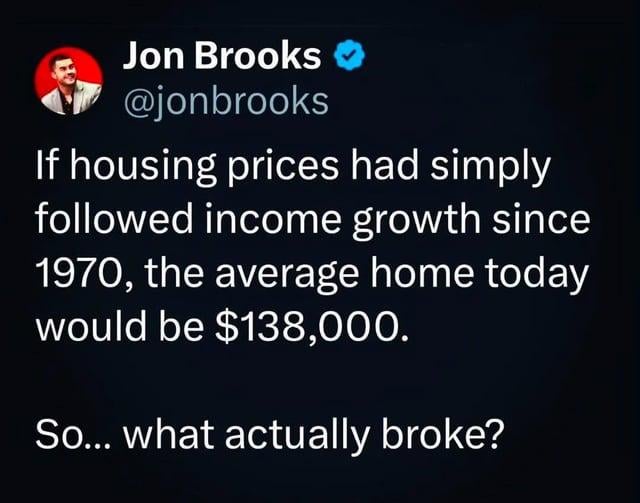
Here’s the history of US inflation in a nutshell.*
Lyndon Johnson wanted to have a Great Society and have a quick win in Vietnam. He thought that a big buildup could give the US a knockout blow, but it turned into an expensive quagmire. The US was dropping a dozen Hiroshimas worth of bombs on the jungle every week. This meant that US steel mills were working 24/7 and not getting updated. LBJ is printing money to pay for this, because he doesn’t want to raise taxes.
Nixon comes in in 1969, promising to end the war. Instead he triples down on the policy of printing money and overworking the factories. Then the Arab Oil Boycott hits. Prices of everything jumps. Many small manufacturing businesses either go broke or relocate to non-Union states. All those fancy Manhattan lofts you see today started as factory buildings.
And while the US steel mills were running day and night, Japan and Germany couldn’t get American steel, so they started building their own mills. Mills that needed a lot less power than the aging US mills. Suddenly Americans were willing to buy a tiny Japanese car instead of a Detroit model that got 6 mile to a gallon.
Jimmy Carter gets one term as President before the Iran Hostage Crisis ruins him. Carter hires Paul Volker to run the Fed and save the economy. Volker’s plan works, but it’s Ronald Reagan who gets the credit. Ronnie kept Volker in place.
Reagan has his own version of Nixon’s print and spend policy. Tax cuts for the rich and bank deregulation create an artificial boom in the 1980s that lead to a stock market ‘correction’ in 1987.
When Nixon came into office, ‘middle class’ was one Union job paying for a family of four and $1 million was considered a vast fortune that could buy a dozen houses.
By the time Bush Sr. was done, ‘middle class’ was two incomes to support the household, and $1 million was what a rich guy paid for a party.
*this is a very brief description, leaving out many details.
for a brief description this is very impressive.
Thank you.
Eh… I think this puts a bit more emphasis on the economic impact of US Steel to the overall economic outlook during the post war period.
The steel industry was more important to the US economy from the later 1800s to the post war boom, but a lot of the growth in the US market started to diversify way before the Vietnam war. Automation and the popularization of mini mills hit the US steel industry harder than anything.
The same thing goes for the accusation of “printing money” being the real cause of inflation. In reality the rapid rise in inflation was one of the reasons Nixon moved to fiat currency. The Brenton Woods system was leading to American gold reserves being drained by other nations right when Germany and Japan began to recover during the post war period.
Tax cuts and deregulation is probably the most significant reason we see the wealth gap start to take off. As well as a general change in attitude of CEO like Jack Welch who popularized the shareholder value movement in American business. He pioneered mass layoffs, cuts to pension, and investment cuts to increase paper prophets. Combined with the legalization of stock buy backs and you have today’s modern economy.
It’s a little ambiguous, because US Steel was actually the name of one of the biggest companies.
And yes, I could have written a lot more about Reaganomics, but I wanted to go with a very general outline.
Yes, I also could have clarified better, I was referring to the US steel industry as a whole.
Back in the day, Asimov named it US Robots because of US Steel.
Today, they are barely remembered.
So… Jimmy Carter is to be blamed? /s
No /s needed. The MAGAs totally believe it.