

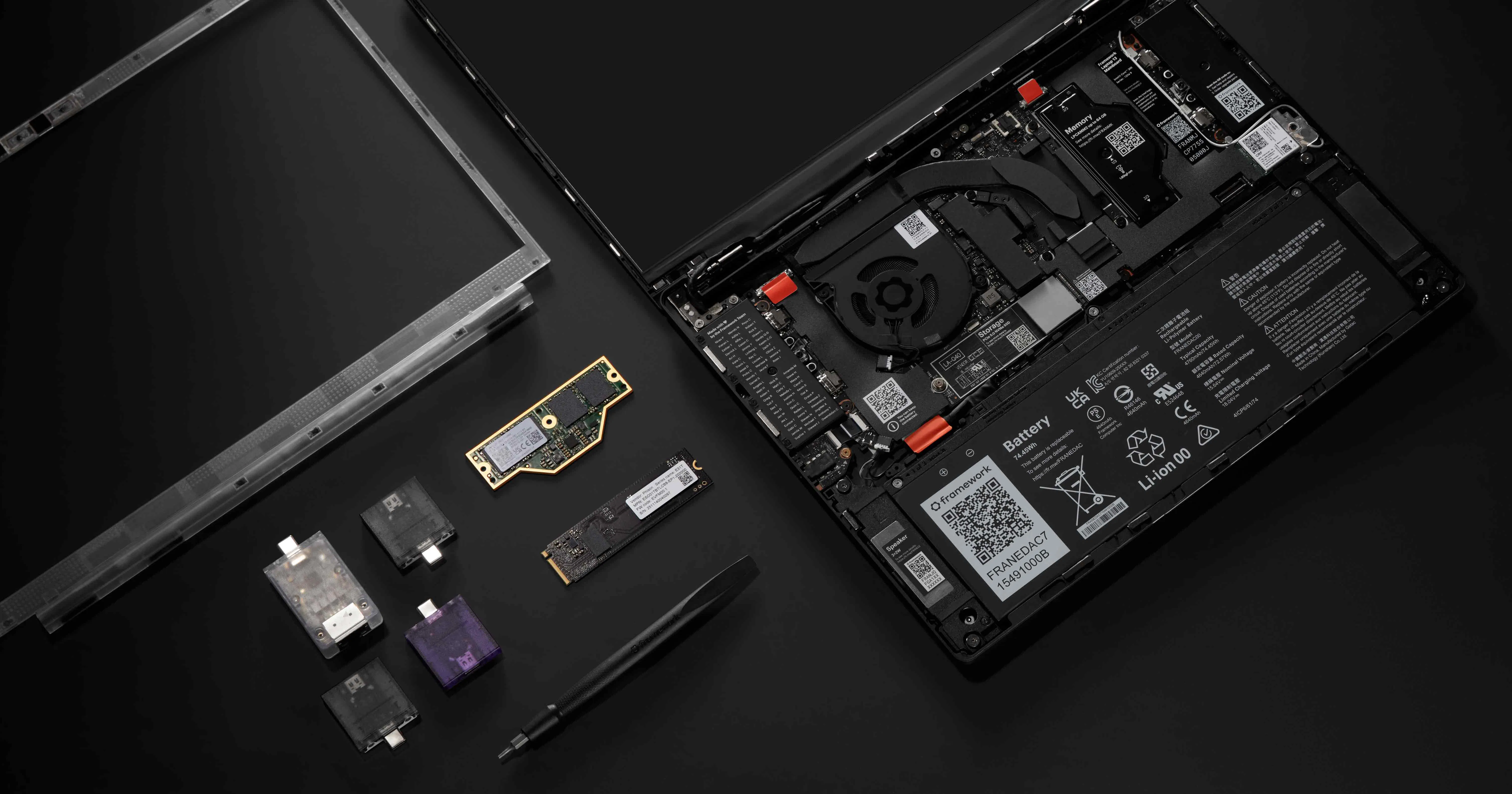
Framework announced the Framework 13 Pro including full Linux support right from the beginning.
Some quick information about the Device:
- will use Intel Core Ultra 300 (Panther-Lake)
- updated Battery Design with (up to) 20h Battery life
- custom designed Display Panel with Touch support (keeping the 3:2 aspect ratio)
- LPCAMM2 for upgradable/replacable RAM without compromising on Speed/Low Power of LPDDR5X
- milled Aluminium Unibody chassis
- Full Linux support right from the start (including Firmware update via LVFS, Fingerprint Reader, etc.)
- Haptic Touchpad
- and all the repairability features Framework is known for
You can watch their YouTube Video for a quick summary:
- YouTube: https://www.youtube.com/watch?v=GnOpIQJnYWU
- Invidious: https://inv.nadeko.net/watch?__goaway_challenge=js-refresh&__goaway_id=5a21ef489cbc0e9e48ccded2c92f2b68&__goaway_referer=https%3A%2F%2Finv.nadeko.net%2F&v=GnOpIQJnYWU
I was looking for a new laptop to replace my old Lenovo Yoga 370 and initially disregarded the Framework 13 because of some downsides (low Battery Life, bad Camera, etc.) and was looking to go with one of the following devices:
- HP Elitebook X g1a
- the new Dell XPS 14
- Asus Expertbook PM5 G2
or also a MacBook pro. I am using Linux since more then 10 years and never touched MacOS at all. So I was not sure if MacOS would work for me. But this announcement made it easy: It will be a Framework 13 Pro with Intel X7 358H!
This is definitely worth mentioning. You apparently can get it working with a dedicated encrypted swap partition (which I admittedly haven’t tried) but I just turned off secureboot. The risk/convenience tradeoff is worth is for me.
That’s not what I ready unfortunately. When booted in secureboot, the kernel enters lockdown mode which disables all hibernation, regardless of the swap being encrypted or plain text.
It seems there are two kernel patches available to enable hibernation in lockdown mode, but not in mainline.
This one is more of an admin override, where you take the risk of root replacing the swap contents
https://gist.github.com/kelvie/917d456cb572325aae8e3bd94a9c1350
And this one is complicated but uses the TPM to ensure only the kernel, not root, can write the hibernation image in a way that causes it to be trusted on waking, so there is no reduction in assurance compared to clean booting a signed kernel with secureboot:
https://mjg59.dreamwidth.org/55845.html
But that’s all too much for me, I intend to turn it off again.