

One major source of that pollution is easy to overlook: on any given day, millions of washing machines hum in homes around the world. What most people don’t see is what flows out with every rinse cycle: microscopic plastic fibers shed from synthetic clothing, slipping through wastewater systems and into rivers, oceans and ultimately, our food chain. In Columbia’s M.S. in Sustainability Management (SUMA) and M.S. in Sustainability Science (MoSSS) programs, which are offered by Columbia’s School of Professional Studies in partnership with the Columbia Climate School, that invisible problem became a call to action.
As students in the SUMA program, Yoni Ronn (’23SPS, Sustainability Management) and Siddhant Srivastava (’23SPS, Sustainability Management) began asking a deceptively simple question: What if we could stop microplastics at the source?
…
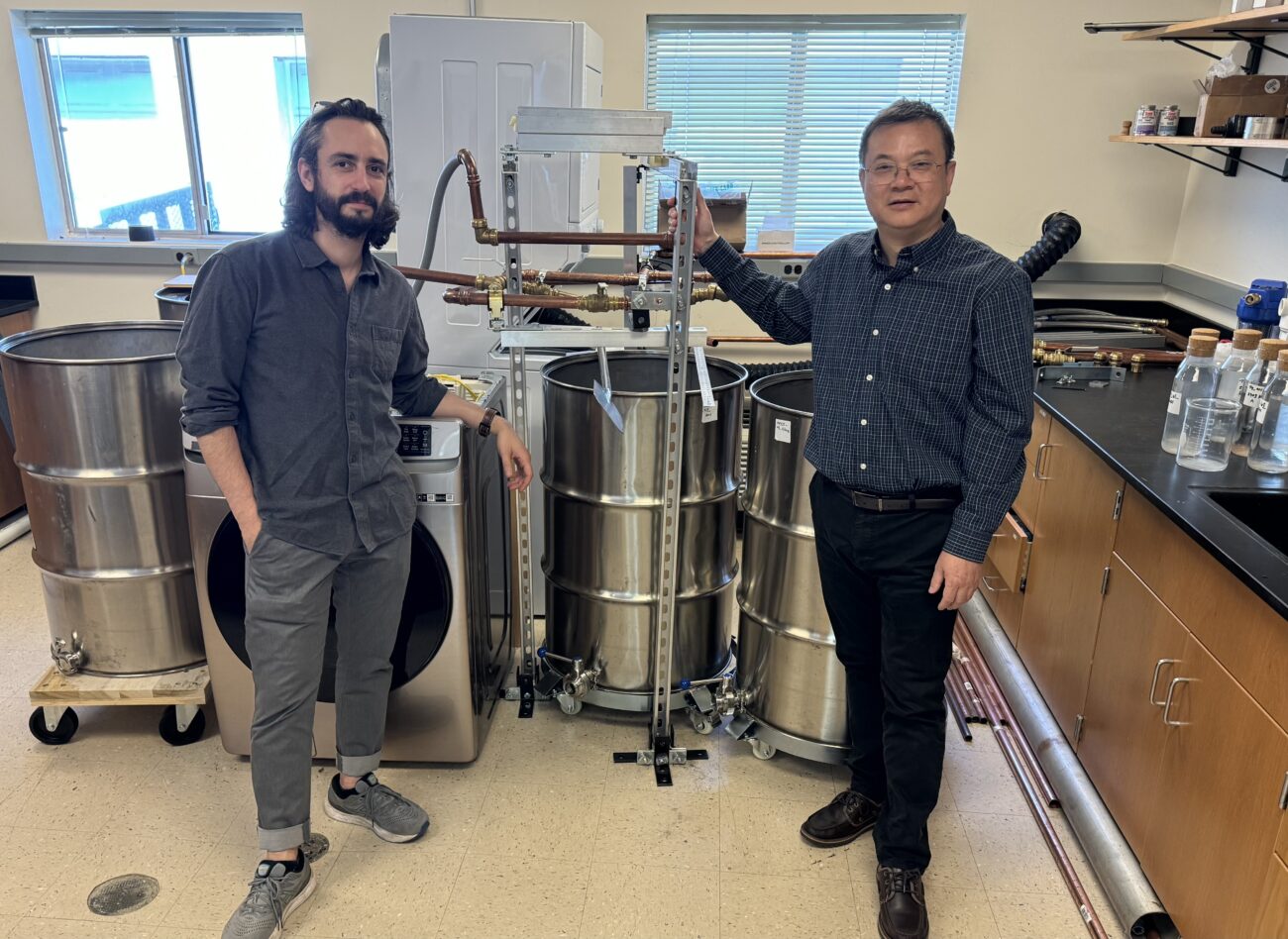
Based on research methods and technology developed at LDEO, Yan, along with colleagues Joaquim Goes and Nick Frearson, designed a microplastic filtration system for capturing fibers released during the laundry process before they enter waterways.
Sewage treatment plants would be a good place as well. Also for testing plastic-eating organisms.
I’m for the centralized ‘pump it to the treatment plant’ idea. I know several people that just flush their dryer lint down the toilet.